
Miri Tua Pek Kong Temple: Read the Old Town Between the Roofs and the Fish Market
-
At the corner of Jalan Bendahara, green roof tiles and curling dragons sit beside traffic lights rather than behind a museum lawn. That is where I would begin with Miri’s Tua Pek Kong Temple: not by counting the decorations, but by looking at how tightly a place of worship still fits into the old trading town. The fish market next door makes more sense of its position than a stand-alone photograph ever could.
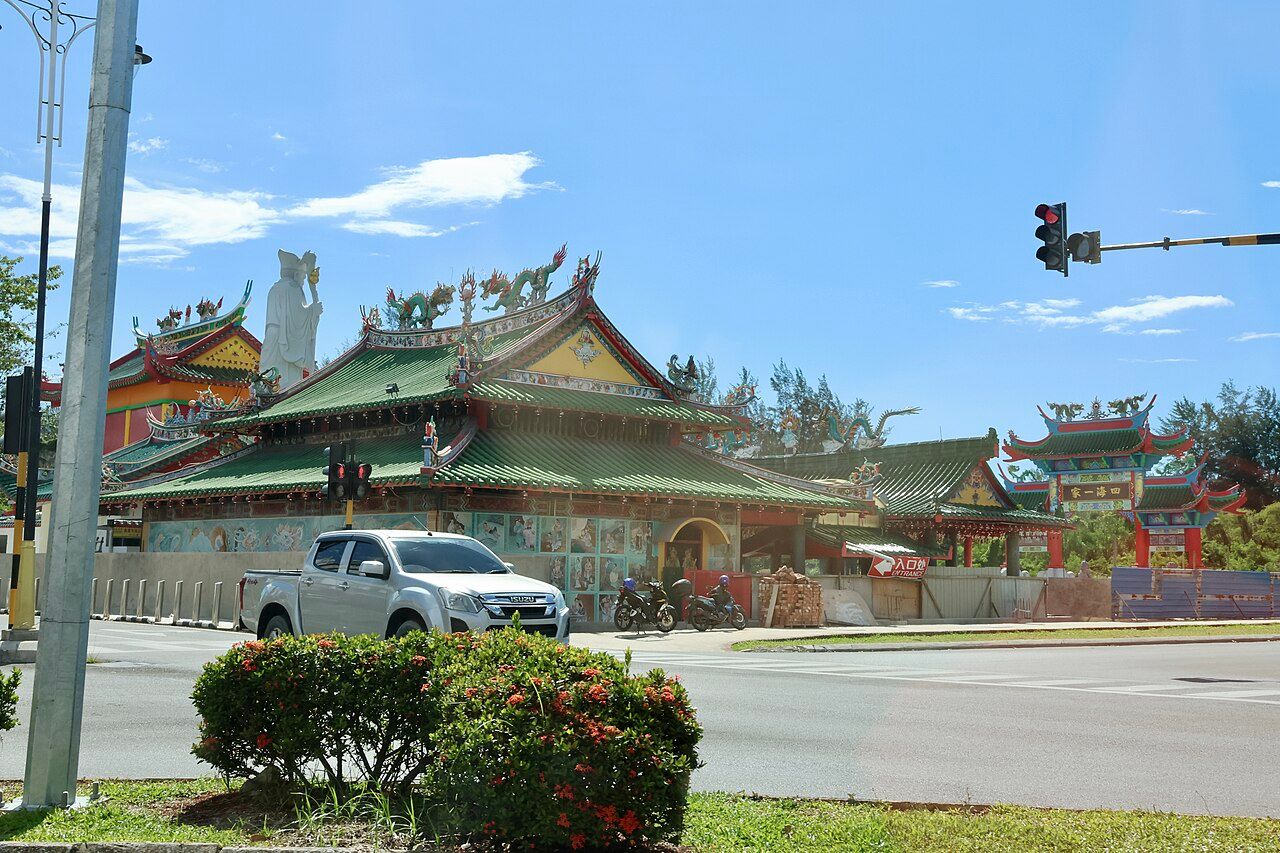
 Pangalau / Wikimedia Commons · CC BY-SA 4.0 · 28 Oct 2023 · resized, not cropped
The temple’s origin belongs to the unsettled early years of the oil town. Chinese workers and traders were among the people drawn to Miri as the petroleum industry expanded. The community’s founding story links the temple to an epidemic and a riverside ritual, followed by the establishment of a shrine in gratitude in 1913. I would read that as a record of how people sought protection and built solidarity in an unfamiliar town—not as a medical explanation for why an epidemic ended.
The river mattered here before the street scene took its present form. Worship, landing fish and buying provisions were neighbours, not separate sightseeing categories. The temple beside the fish market lets you read those overlapping routines on foot. It is a better starting point for understanding old Miri than treating every historic building as an isolated monument.
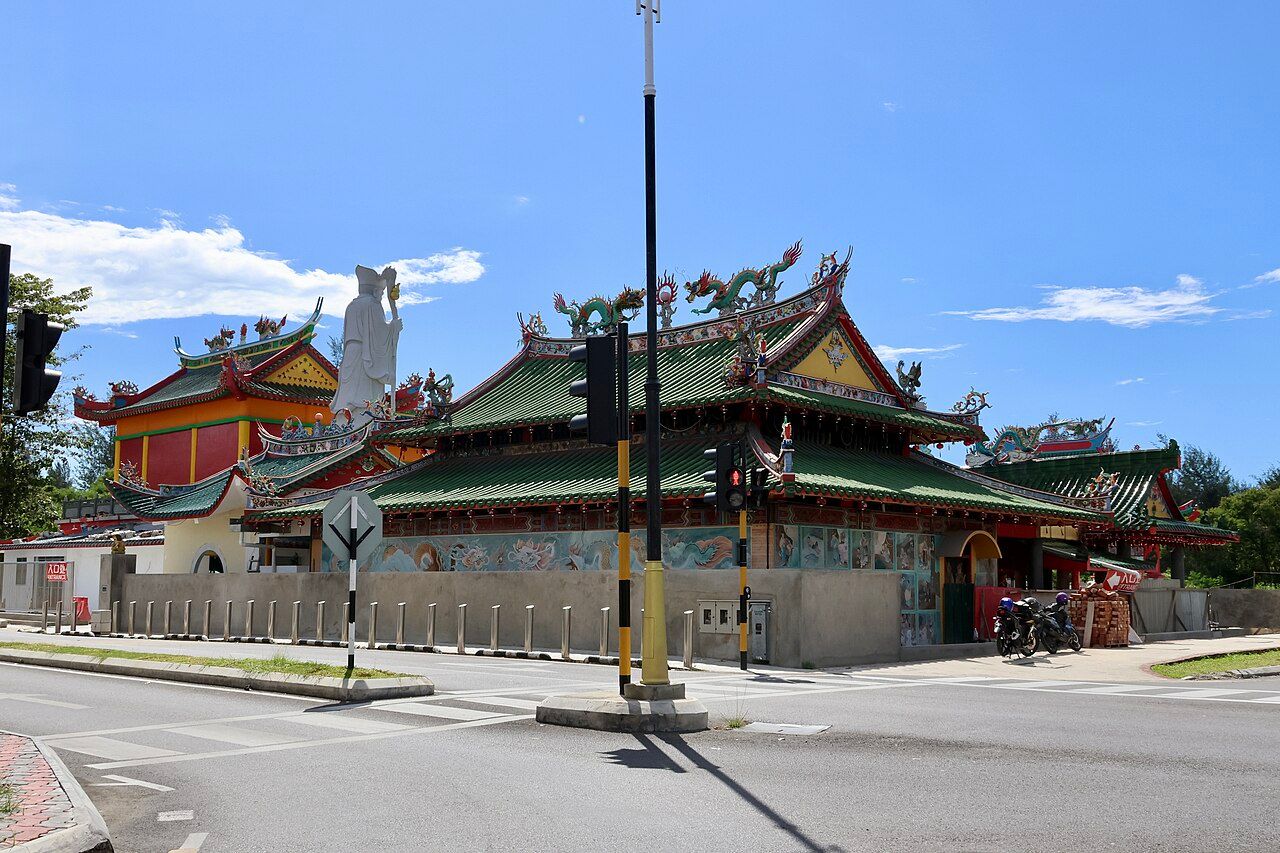
Pangalau / Wikimedia Commons · CC BY-SA 4.0 · 28 Oct 2023 · resized, not croppedLook upward, then back toward the compound. The tiled roofs belong to the smaller-scale temple, while a seven-metre Tua Pek Kong statue rises above it. That statue was installed in April 2023 as part of a much larger extension and beautification programme. The contrast is useful: the landmark is not simply an untouched piece of 1913. A major renovation in 1977 already marked an earlier round of renewal; generations of donations, repairs and new building have continued to reshape it. The older temple and the enlarged surroundings tell different chapters of the same community story.
The photographs here were taken in 2023–24, during that changing phase; they are not a promise that today’s barriers or building works will look identical. In August 2025 a further RM500,000 restoration allocation was announced, with particular attention to traditional carving and architectural expertise. I would not assume every corner is accessible just because the temple remains a visitor landmark. Follow the current entrance and any on-site restrictions rather than stepping around works for a cleaner shot.
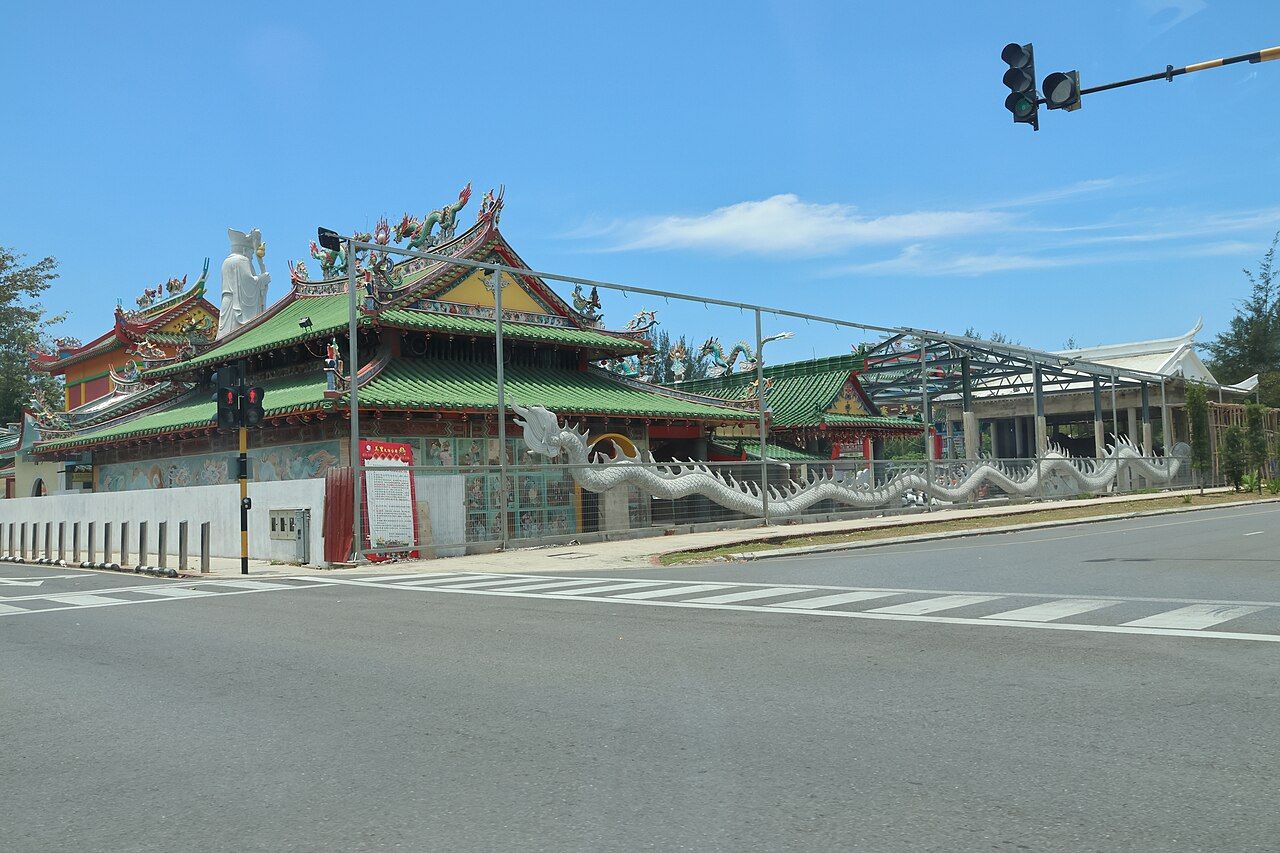
Pangalau / Wikimedia Commons · CC BY-SA 4.0 · 16 Mar 2024 · resized, not croppedNor is this only a story of stone, tiles and timber. In May 2026 the temple’s grand procession brought together more than 7,000 participants, including visiting groups and different cultural communities. An ordinary-day stop cannot reproduce that event, but it helps explain why the compound has grown beyond the scale of a small shrine. This is an organising place for living traditions, not a stage set left behind by the oil boom.
For a first visit, I would give the roofline, wall decoration and the relationship between the hall and the much larger statue more attention than the number of photographs taken. Keep clear of people praying, ask before photographing worshippers, and let attendants indicate where visitors may stand. A working religious space is easier to appreciate when you do not expect it to behave like an exhibition.
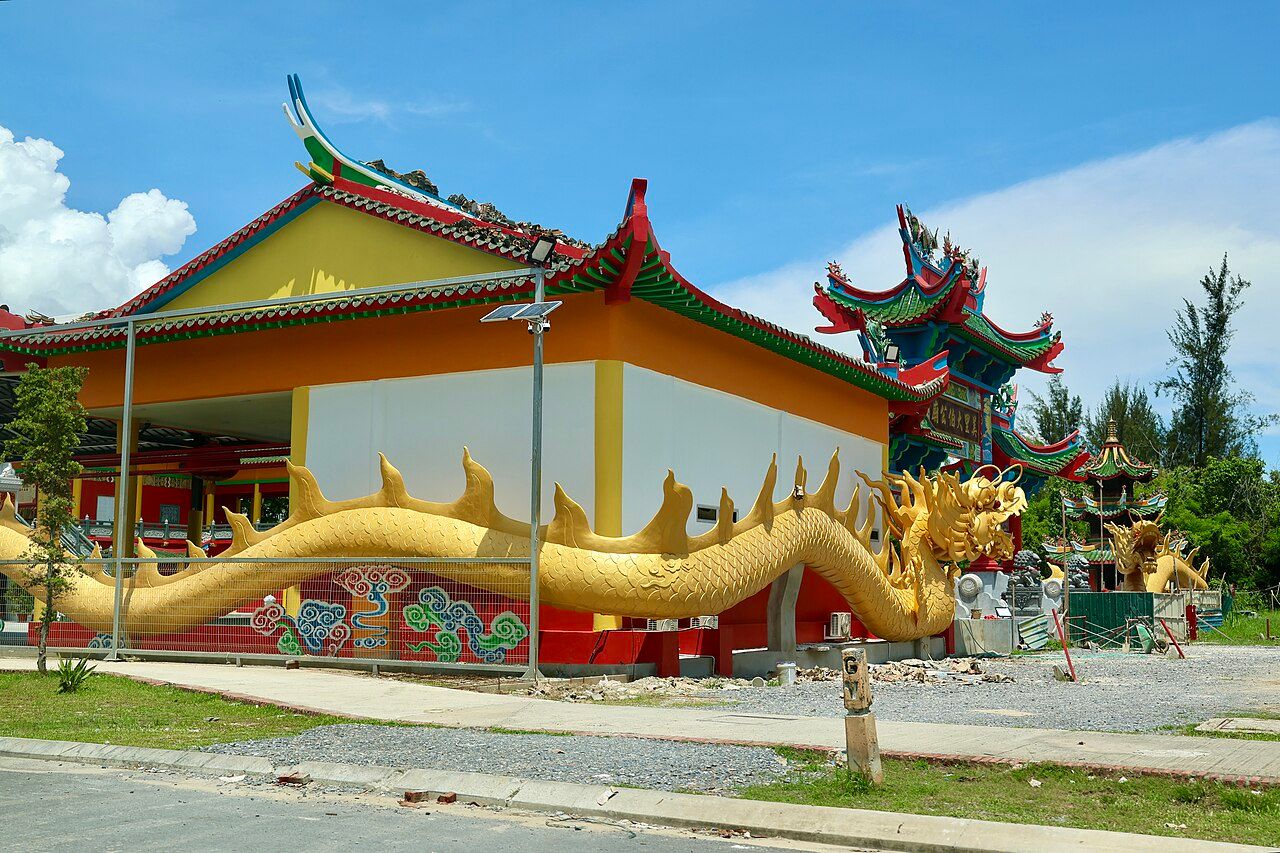
Pangalau / Wikimedia Commons · CC BY-SA 4.0 · 25 May 2024 · resized, not croppedI would combine this with a morning walk around the old fish market and nearby central-market streets, then stop for breakfast in the old town. That route is the attraction: the temple explains the neighbourhood, and the neighbourhood gives the temple a human scale. History-minded visitors already staying in Miri can make a worthwhile short detour; someone expecting an extensive museum, a full-day attraction or a guaranteed procession on arrival may be disappointed. It is not a sensible day trip from Kuching just for this one stop.
Use Tua Pek Kong Temple, Miri on Google Maps, beside the old fish market at Jalan Bendahara. Choose daylight for reading the architectural details, check the day’s access with the attendant, and leave some room in the plan for the streets around it. Here, the most revealing view is often the one that keeps the market in the picture.


Hello! It looks like you're interested in this conversation, but you don't have an account yet.
Getting fed up of having to scroll through the same posts each visit? When you register for an account, you'll always come back to exactly where you were before, and choose to be notified of new replies (either via email, or push notification). You'll also be able to save bookmarks and upvote posts to show your appreciation to other community members.
With your input, this post could be even better 💗
Register Login