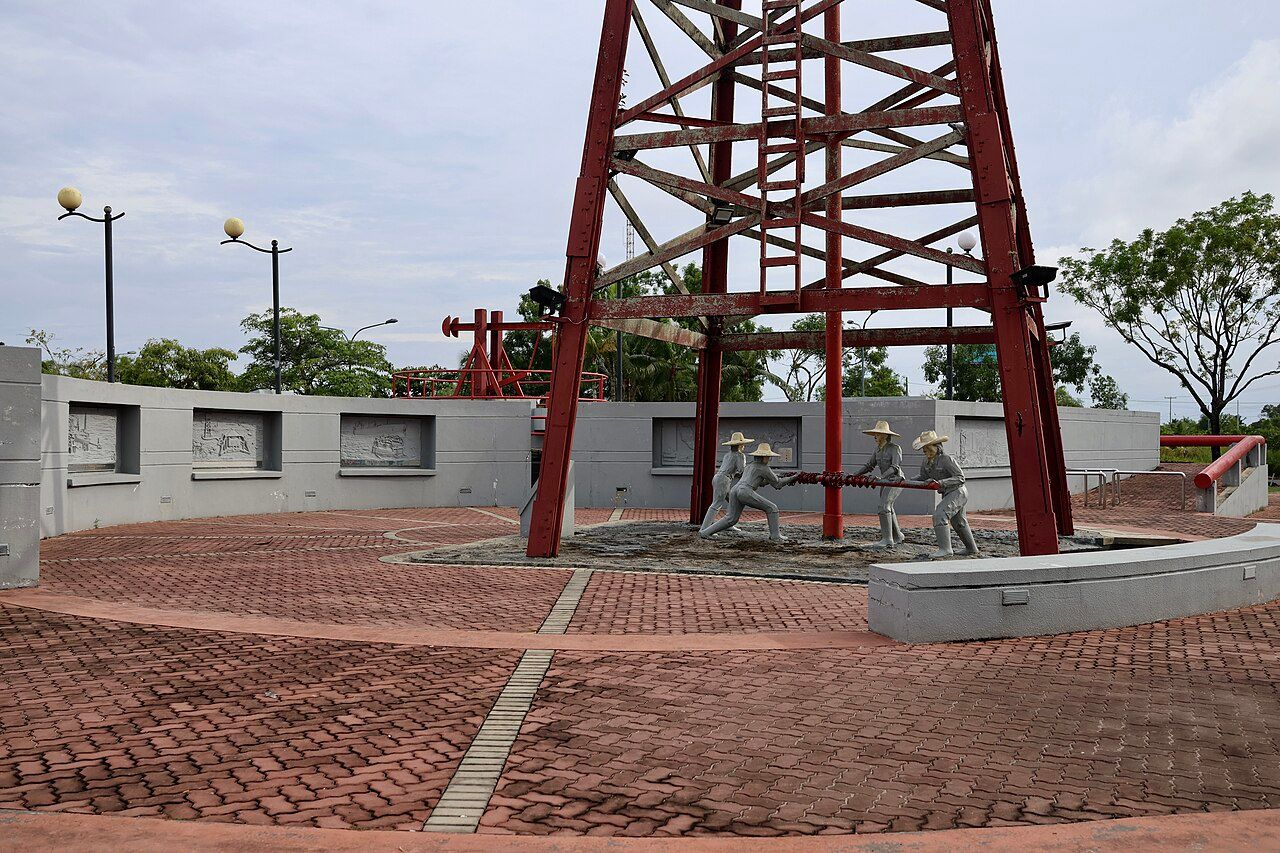
The useful detail at Miri Petroleum Museum is not just the tall red derrick. Look underneath it: four worker figures lean into a drilling tool. Before the hill becomes a panorama, that little group makes the story human-sized. I would start there, with the effort needed to get oil out of the ground, rather than rush straight to the city-view photograph.
 Pangalau / Wikimedia Commons · CC BY-SA 4.0 · 2023-09-22 · resized, uncropped
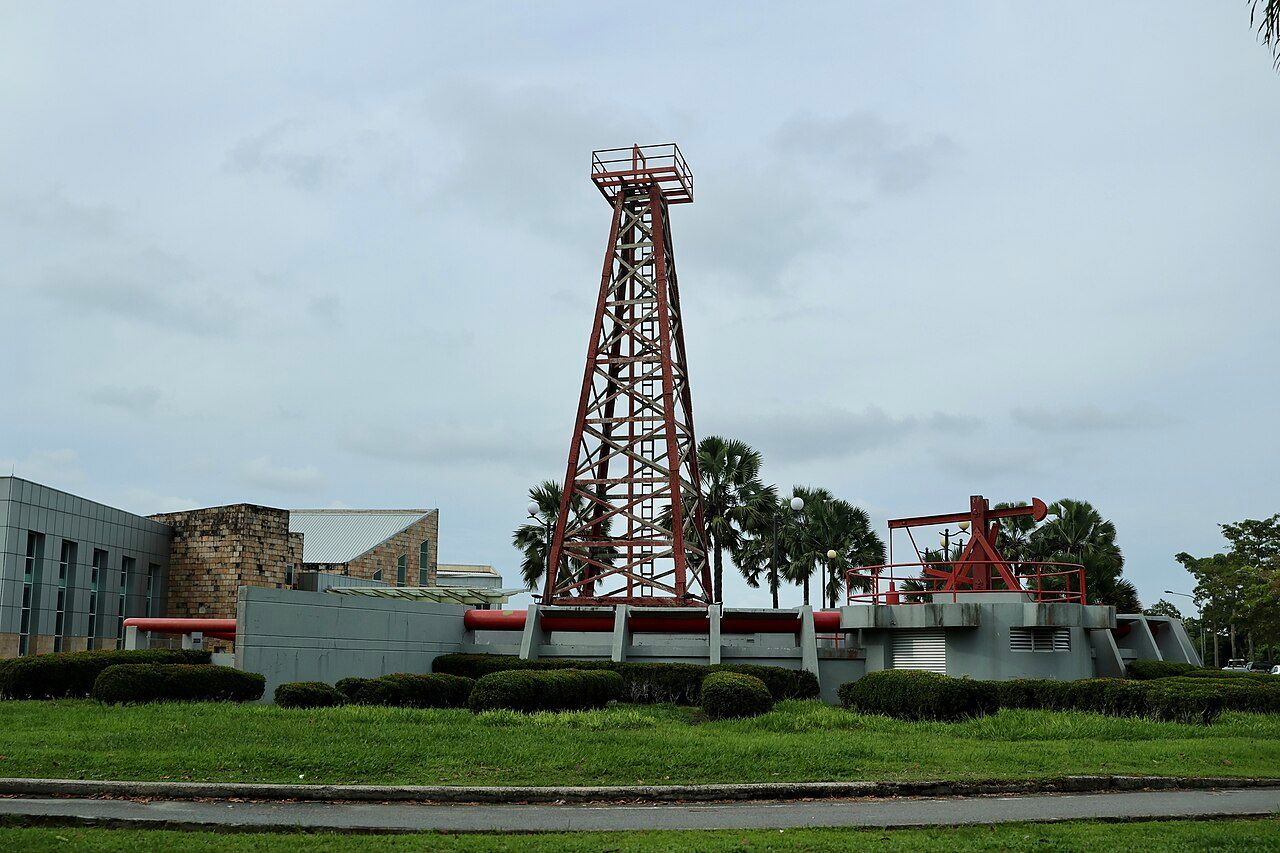
This is Canada Hill, also called Bukit Tenaga, above Miri in northern Sarawak. The Grand Old Lady beside the museum marks Oil Well No. 1, which produced from 1910 until 1972. The distinction matters: the tower is a record of an extraction site, not an operating well to watch at work. What is now a visitor stop once belonged to the industry that gave Miri its oil-town identity.
Those six decades are a useful way to read the surroundings. Oil history here is not an isolated machine in a gallery: the well, the pumpjack and the city below belong in the same mental picture. The derrick shows the vertical business of drilling; the lower, rocking-arm pumpjack represents another stage in bringing oil to the surface. Taking a moment to distinguish the two gives the outdoor display more meaning than another photograph of a metal tower.
Pangalau / Wikimedia Commons · CC BY-SA 4.0 · 2023-09-22 · resized, uncropped
The museum arrived much later. It opened on 20 May 2005 with support from Shell Malaysia and Petronas, the same day Miri became a city. That pairing is the story I would keep in mind on the way inside: a working industrial past being turned into a public explanation of how the city came to be. The attraction is strongest when the building and the old well are treated as one stop, not as competing places to tick off.
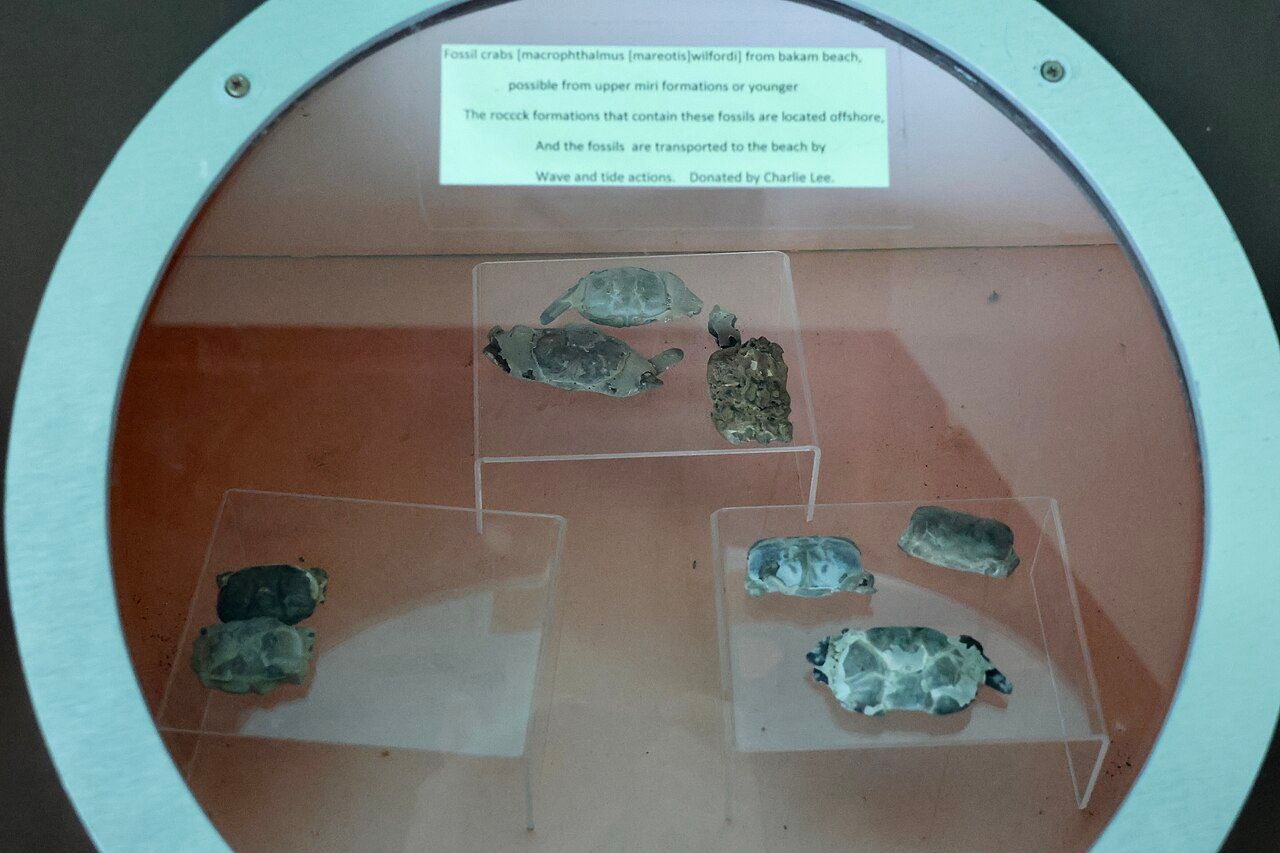
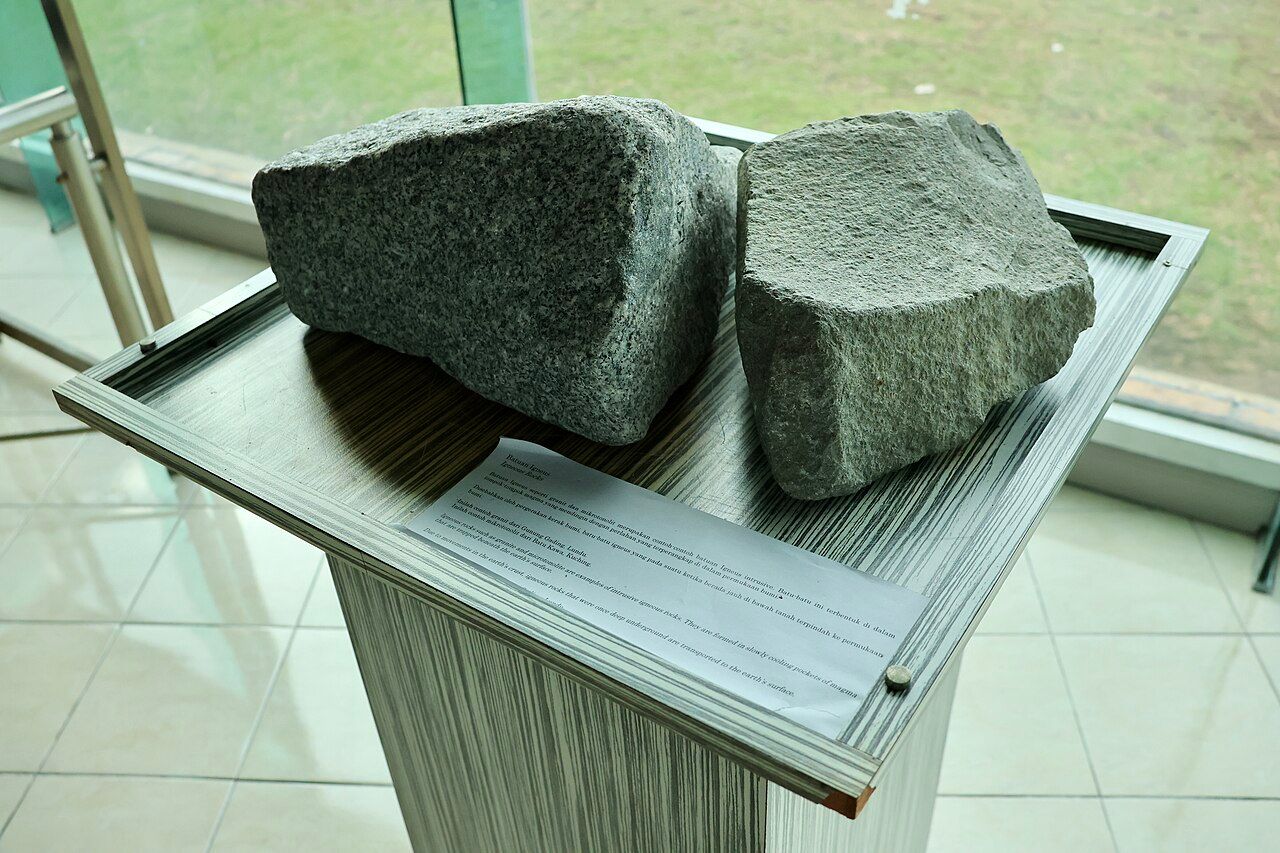
Inside, the subject shifts from the people and machinery to the ground itself. Oil formation, extraction and the industry's development need more than a date on a sign. The rock and fossil displays give that story a slower timescale. A case of small fossil crabs, for example, is a reminder to look beyond the familiar tower silhouette and notice the museum's geological side.
Pangalau / Wikimedia Commons · CC BY-SA 4.0 · 2023-09-22 · resized, uncropped
I would not sell this as a polished science centre. The exhibition is a better fit for someone who likes connecting industrial history with a real landscape than for a family expecting every interactive station to work. The older-style displays are worth approaching with modest expectations. A proposed exhibit upgrade was discussed in May 2026, but a proposal is not a finished attraction. Build the visit around the well and the history rather than a guaranteed turn on a simulator.
That makes this a sensible short stop within a Miri stay, especially for an oil-and-gas enthusiast, a geology-minded traveller or children who enjoy asking what a machine actually does. Someone wanting a large, immersive museum could leave underwhelmed. I would allow roughly an hour for the museum and outdoor interpretation, with extra time only if the hilltop views are part of the plan. That is an itinerary allowance, not a tour duration you have to follow.
Pangalau / Wikimedia Commons · CC BY-SA 4.0 · 2023-09-22 · resized, uncropped
The route works best with the museum first and the open-air viewpoint afterwards. Coming only at sunset can mean seeing the derrick but missing the galleries. From here, continue back down to central Miri for the rest of a city walk; this is not a day-trip detour from Kuching. If travelling with anyone who dislikes a hot uphill walk, a car or taxi to Jalan Oil Well No. 1 is the simpler choice. Keep the forest trails as a separate decision, with appropriate shoes and daylight, rather than assuming they are part of an easy museum visit.
The museum's current visitor information lists free admission, Monday–Friday 9am–4.45pm and weekends/public holidays 10am–4pm, with specified festival and holiday closures. Wear modest clothing and check the day's notice before a special trip. The indoor timetable and the outdoor hill are different things: free entry does not mean the museum stays open for the evening view.
Find Miri Petroleum Museum on Google Maps
For me, the worthwhile sequence is simple: look at the workers under the derrick, understand the well's working life, then turn towards the city it helped shape. Which would keep you here longer—the machinery or the geology?


