
Sibu Tua Pek Kong Temple: What the Pagoda and Rebuilt Roofs Tell You
-
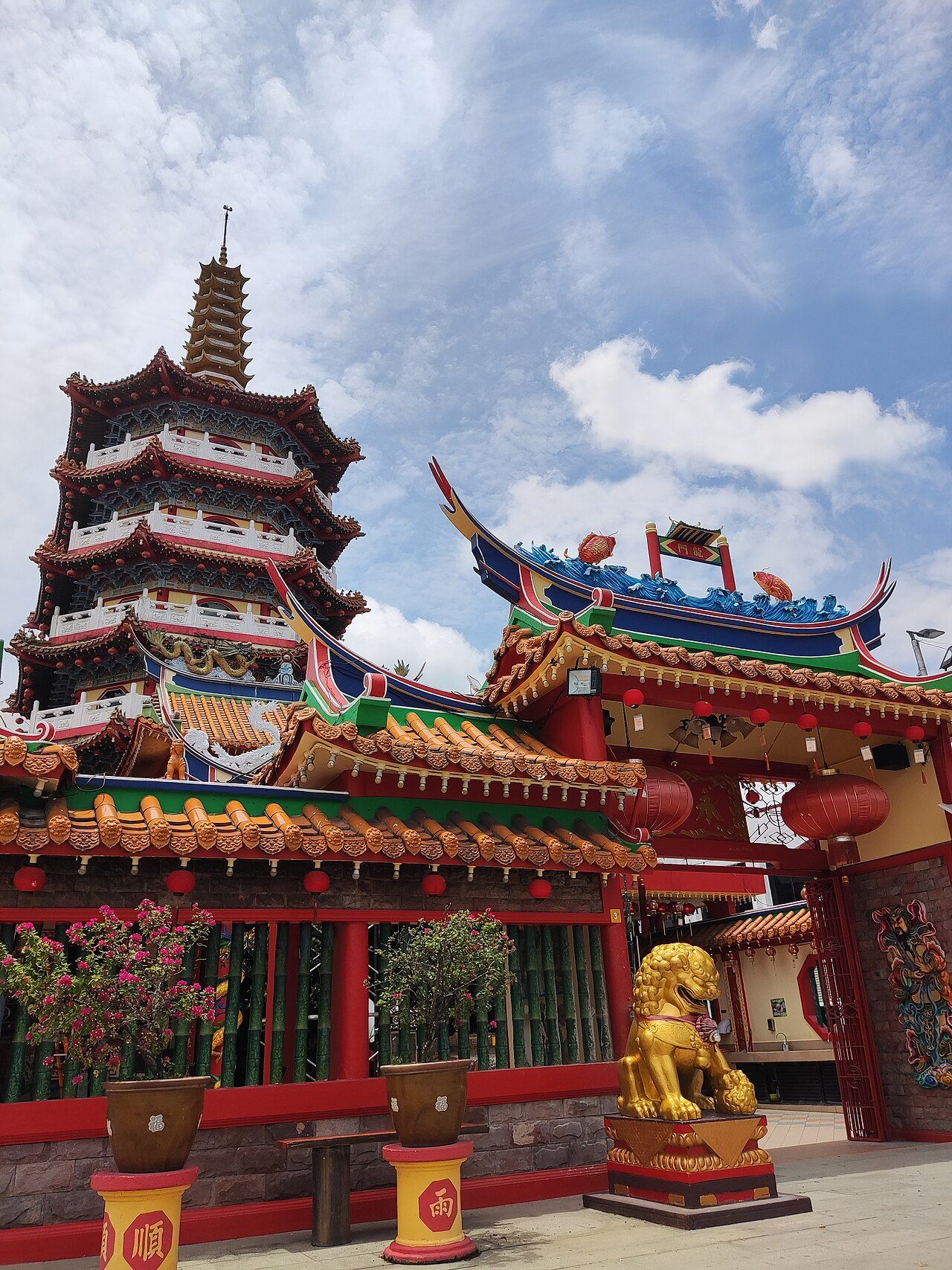
The seven-storey pagoda makes Sibu's Eng Ann Teng Tua Pek Kong Temple easy to pick out. I would resist treating it as the whole attraction. Look lower first: the curved rooflines of the entrance, the dragons above the tiles, and the much smaller worship space beside the tower. They belong to different chapters of a riverside institution that has been rebuilt rather than preserved unchanged.
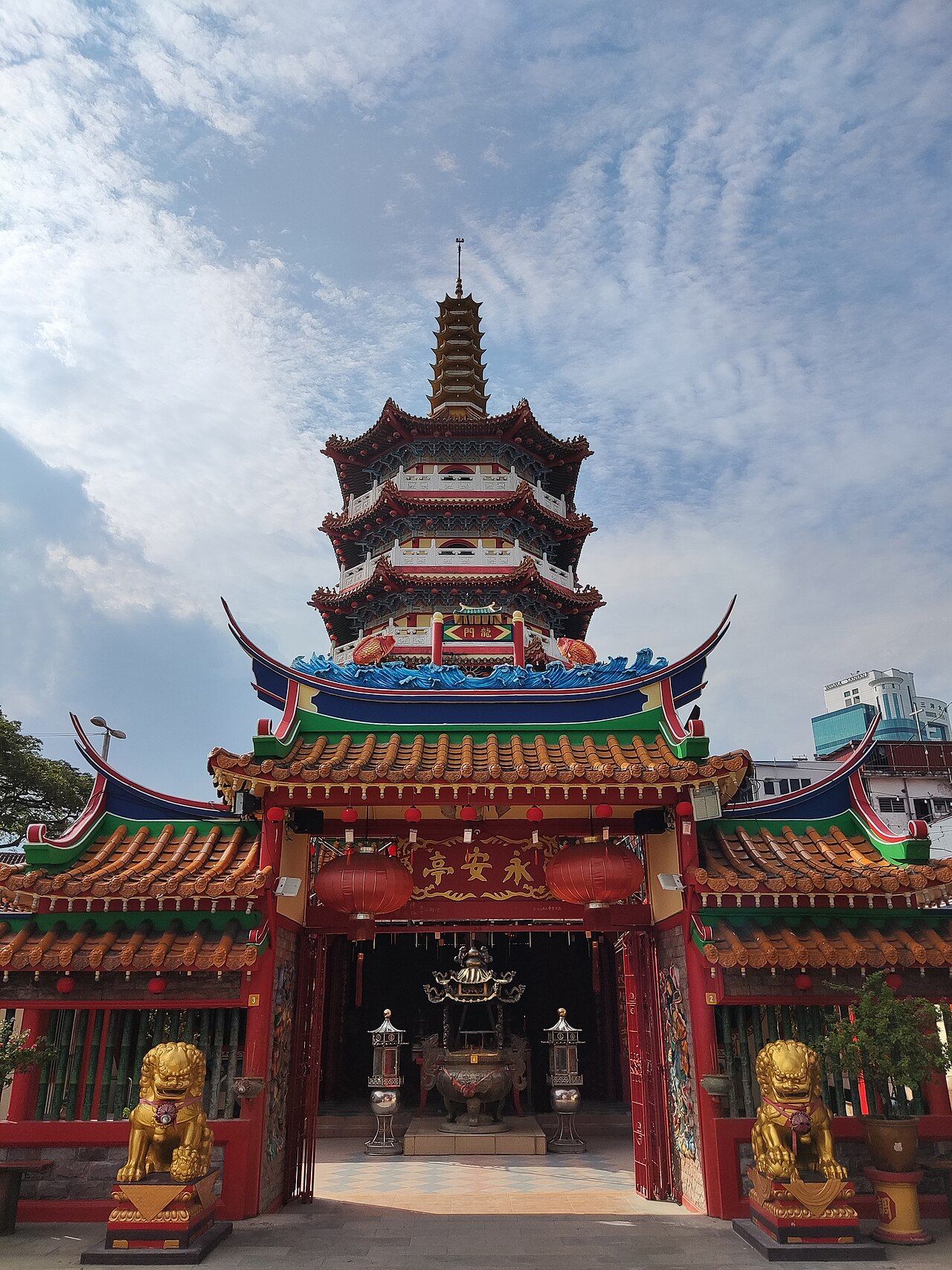
 Wee Hong · 2023 · CC BY-SA 4.0 · resized, uncropped
At Jalan Temple, the river is part of the explanation, not just a backdrop. Sibu's waterfront puts worship, shopfronts and river traffic close together. I would start at street level, take in the temple frontage, then turn toward the Rajang before deciding whether to go inside. That short change of direction helps place the building in a working town rather than isolate it as a colourful monument.
There was a small wooden Chinese temple here by the time it appeared in the Sarawak government's 1871 report. A rebuilding in 1897 brought a tiled roof and stone floor, with a specially sculpted Tua Pek Kong statue imported from China. The useful distinction is between the age of the institution and the age of the walls: this is a long-lived place of worship, but not one untouched building from the nineteenth century.
Its survival story has two very different turns. The fire that devastated much of Sibu on 8 March 1928 left the temple unscathed. Wartime bombardment in 1945 did damage it; the deity statue survived, and the wooden structure was rebuilt after the war. I would not fold those events into a vague tale that the entire temple survived everything. The interruptions matter. They show how a community kept returning to a place even when its fabric had to be replaced.
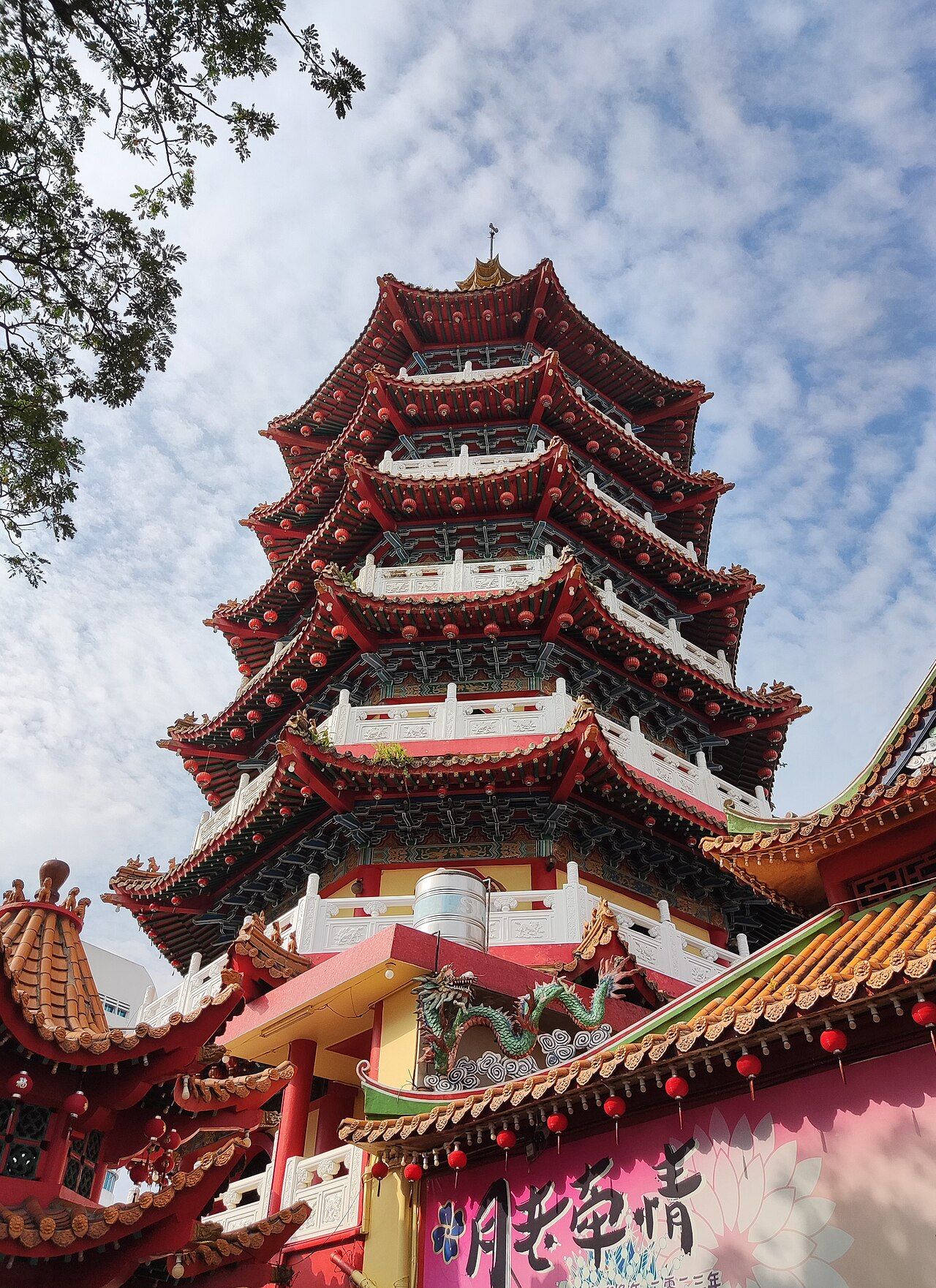
Wee Hong · 2023 · CC BY-SA 4.0 · resized, uncroppedThe present appearance makes more sense with that rebuilding in mind. In 1957 the temple was reconstructed in concrete. Another renovation in 1979 replaced the belian roof with a concrete roof and introduced dragon and phoenix decoration. Looking at the roofline is therefore a way of reading adaptation, not simply admiring something assumed to be ancient. The ornamental figures and colourful tiles carry a continuing architectural language across changes in materials.
The pagoda adds another layer. In 1987 the rear section was replaced by a seven-storey tower dedicated to the Goddess of Mercy. It is younger than the temple's history and serves a distinct devotional purpose. From the entrance, compare the broad, low roofs with the tower's repeated balconies and upward-curving eaves. That contrast tells a clearer story than a single photograph labelled “old Chinese temple”: the complex grew to accommodate more than one focus of worship.
Wee Hong · 2023 · CC BY-SA 4.0 · resized, uncroppedThe relationship with the river is changing again. In July 2026, plans for an expanded waterfront precinct and a decorative gateway were announced, with unused pontoons and a gangway to be relocated before expansion could proceed. These are development plans, not a finished attraction to add to your checklist. Keep away from any fenced works or closed landing areas, and do not expect the waterfront to match older photographs exactly.
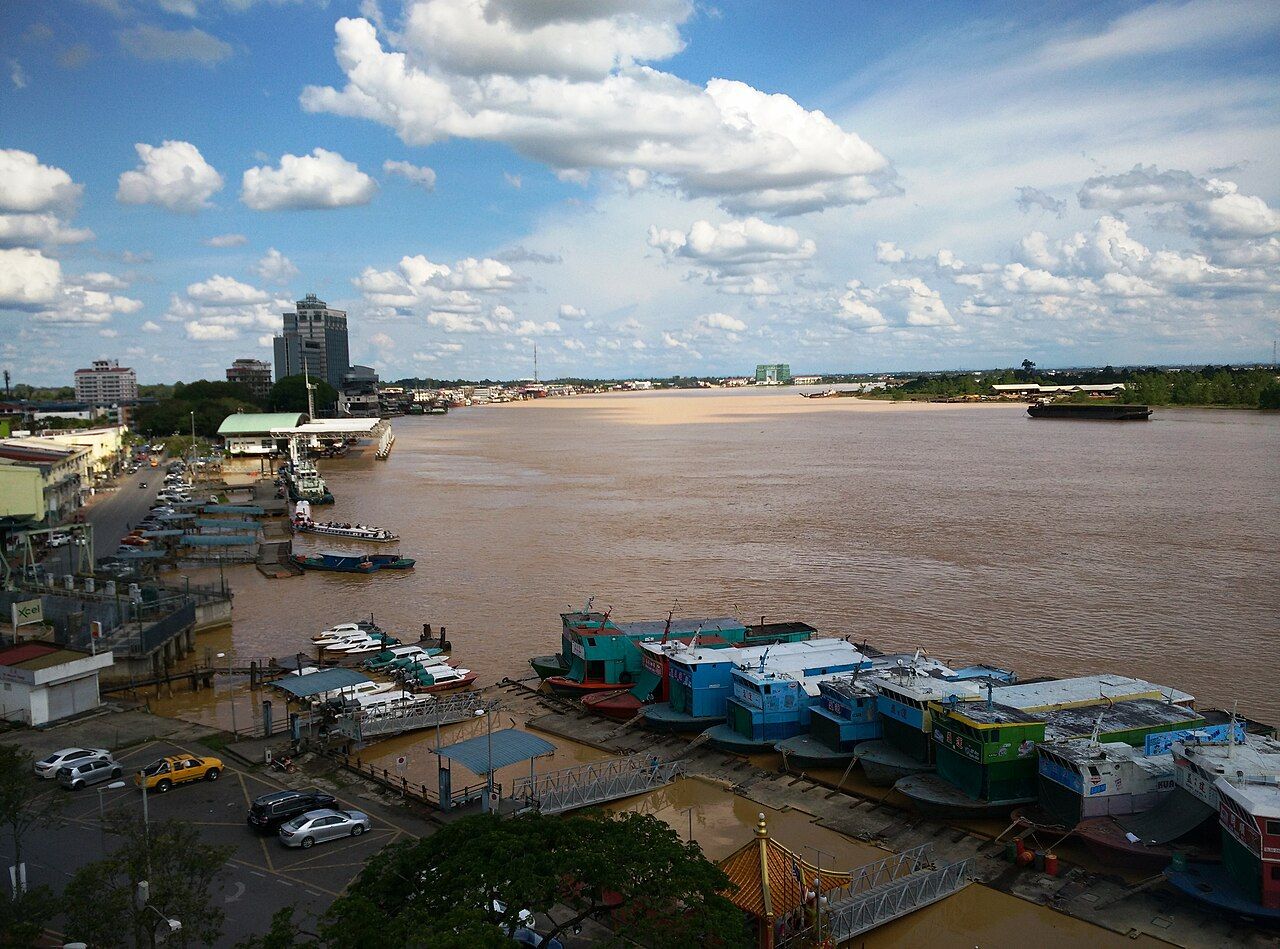
Cerevisae · 2017 riverfront view, before the 2026 expansion plans · CC BY-SA 4.0 · resized, uncroppedI would use the older river view above to understand the setting, not to find a present-day boarding point. Its boats and landing structures explain how tightly the temple sits against Sibu's riverfront life; the photograph is from 2017, before the 2026 expansion plans. The point of looking toward the water today is to understand that connection, not to recreate an old camera angle or enter a restricted jetty.
For a first Sibu visit, this is a worthwhile stop if you enjoy the relationship between architecture, community memory and a town's geography. It may feel too small if you want a large museum, an organised show or a guaranteed tower climb. I would allow roughly half an hour for the frontage, accessible worship areas and nearby riverfront; that is a suggested pace, not an official tour duration. Do not make a pagoda ascent the condition of a successful visit: interior and upper-level access depend on the temple's arrangements on the day.
Combine it with Sibu Central Market and the old-town streets rather than driving across town for a single photograph. The market is only a short walk away, and the pairing lets you see everyday trade alongside a place of worship that has endured repeated rebuilding. From Kuching, I would include the temple in an overnight Sibu trip, not make the long journey just for this stop.
Find it on Jalan Temple, Sibu: Eng Ann Teng Tua Pek Kong Temple on Google Maps. Plan a daylight visit, dress respectfully, give worshippers space and ask before photographing ritual activity. Follow the entrance notices and check with the caretaker before going upstairs; this guide does not promise fixed tower hours or access through construction areas.
I would leave looking back at the low roofs as well as the tower. The interesting part is not just how high the pagoda rises, but how many times the town has chosen to keep this place going.


Hello! It looks like you're interested in this conversation, but you don't have an account yet.
Getting fed up of having to scroll through the same posts each visit? When you register for an account, you'll always come back to exactly where you were before, and choose to be notified of new replies (either via email, or push notification). You'll also be able to save bookmarks and upvote posts to show your appreciation to other community members.
With your input, this post could be even better 💗
Register Login